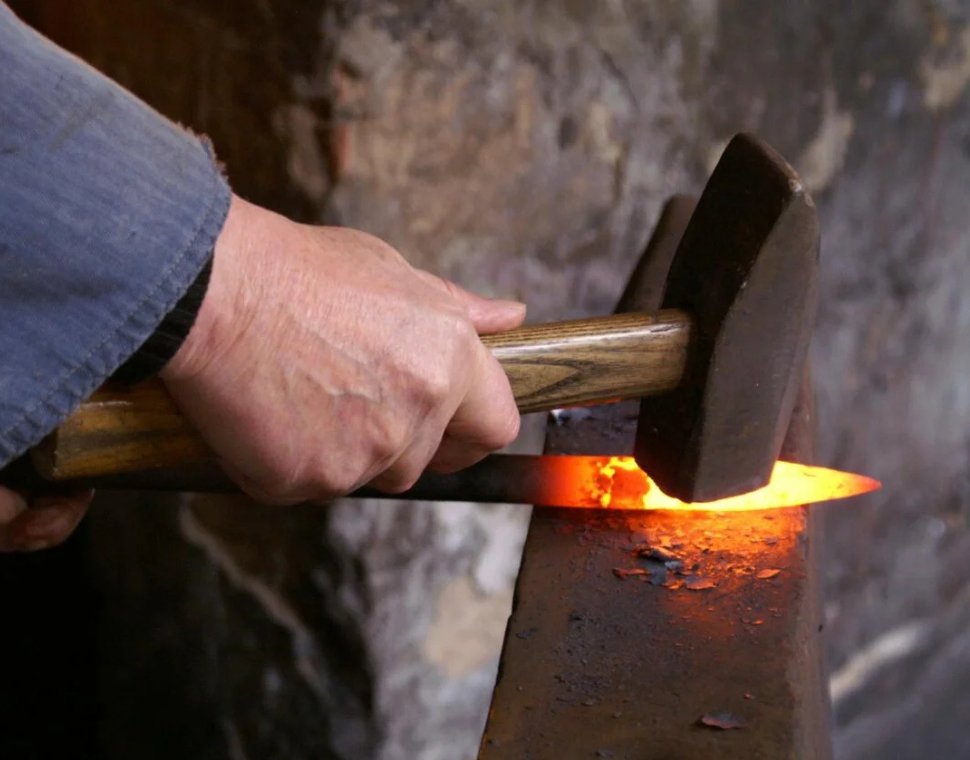
Forging, an age-old metallurgical practice, has been instrumental in shaping the foundations of various industries for centuries. The art of forging involves the manipulation of metal through controlled deformation, resulting in sturdy and reliable components.
In this article, we will unravel the intricacies of forging, exploring its types, methods, techniques, processes, applications, and its role in on-demand manufacturing. Furthermore, we will delve into how Mechkonnect contributes to providing reliable forging solutions.
Understanding Forging
Forging is a manufacturing process that involves shaping metal through localized compressive forces. Unlike casting, which utilizes a mold to shape molten metal, forging works with solid pieces of metal that are manipulated under extreme pressure to achieve the desired form. This method enhances the material’s strength, durability, and structural integrity, making it a preferred choice for critical applications.
Types of Forging
Let us understand the types of forging in detail along with their application examples.
- Open Die Forging
Open-die forging involves deforming a piece of metal between multiple dies, with the workpiece remaining unrestricted. This process is ideal for creating large and simple shapes.
Examples: shafts, discs, cylinders, construction equipment parts like crane hooks, and gears.
- Closed Die Forging
In closed-die forging, the metal is enclosed within dies that contain the desired shape. This method is highly precise and suitable for intricate components.
Examples: automotive parts like crankshafts and rods, hand tools like wrenches, pliers, etc
- Roll Forging
Roll forging employs cylindrical rollers to shape the metal. The material is passed through the rollers, reducing its cross-sectional area and elongating it. This process is suitable for producing long and cylindrical components.
Examples: axles for vehicles, roller bearings, long lengths of threaded bars, bolts, and cylindrical parts.
- Impression-Die Forging
Also known as precision forging, impression-die forging uses machined dies with the desired shape. It is widely employed in the aerospace industry for producing components.
Examples: turbine discs, and engine parts
Now let us understand the processes involved in forging.
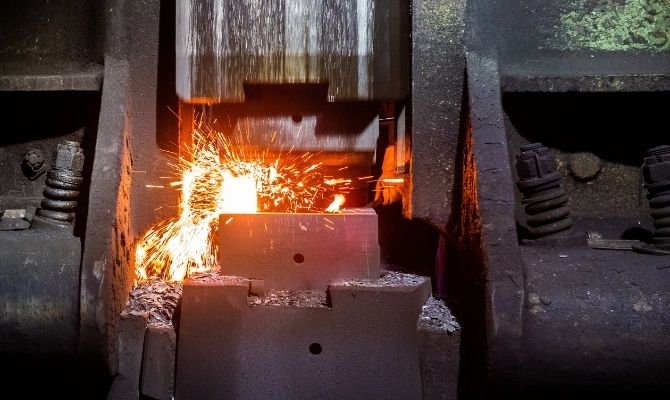
Forging Processes
Hot Forging
Hot forging involves heating the metal above its recrystallization temperature, making it more malleable. This method is suitable for a wide range of materials, including steel and aluminum. Applications include gears, crankshafts, and high-strength structural components.
Cold Forging
Cold forging, performed at or near room temperature, is ideal for producing parts with excellent surface finish and dimensional accuracy. Common applications include fasteners, bolts, and precision components in electronics.
Warm Forging
Combining elements of both hot and cold forging, warm forging occurs at temperatures between hot and cold forging ranges. This method is often used for complex shapes, providing a balance between material properties and formability. Examples include automotive components like transmission gears.