Over the past two decades, the automotive industry has been in continual flux, driven by emissions regulation, electrification, and an unrelenting pursuit of range and efficiency. Amid competing materials and manufacturing paradigms, sheet metal remains a central pillar of automotive lightweighting. Far from being legacy technology, modern sheet metal, when combined with advanced metallurgy, tailored forming processes, and digital manufacturing workflows, delivers a uniquely powerful value proposition: structural efficiency, predictable crash performance, recyclability, and cost effectiveness at scale.
Why sheet metal still matters for lightweighting
Lightweighting is not an exercise in swapping materials; it’s systems engineering. Vehicle mass reductions must preserve crashworthiness, NVH (noise, vibration, harshness) targets, manufacturability, and serviceability. Sheet metal, especially advanced high-strength steels (AHSS) and next-generation coated steels, offers very high specific strength in thin gauges, enabling designers to reduce part thickness without sacrificing stiffness or energy absorption. Recent market analyses show that metals and alloys remain a leading segment of the automotive lightweight-materials market, underscoring metals’ continued dominance in components where structural reliability and cost-per-kilo matter most.
Material evolution: AHSS, boron steels, and tailored tempering
The biggest metallurgical story for sheet metal is the maturation of AHSS families, dual-phase (DP), transformation-induced plasticity (TRIP), and martensitic grades, plus tailored tempering and press-hardening processes. These steels can achieve tensile strengths well above 1 GPa, enabling thinner gauges while maintaining crash energy management. The AHSS market is expanding as OEMs specify mixed-material body structures: high-strength steels in crash-critical zones, aluminum where local stiffness-to-weight gains are highest, and composites selectively where complex geometries or joined lightweight skins are required. Projections for the AHSS market show steady growth as manufacturers balance EV range goals against cost and production continuity.
Forming, joining, and the digital edge
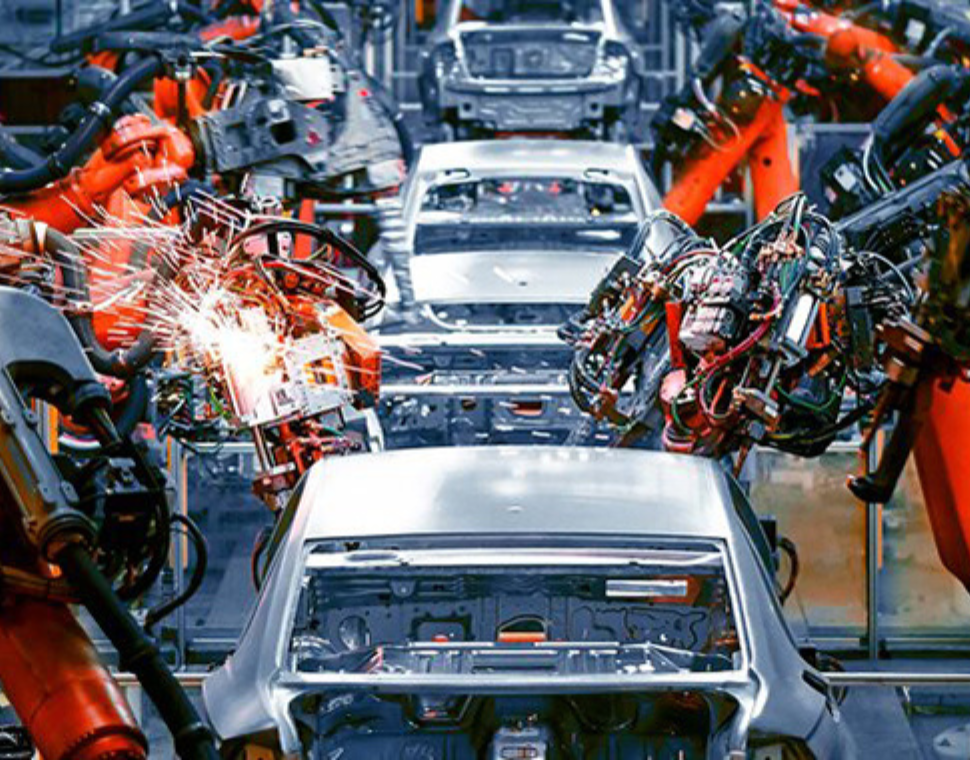
Advances in forming technology, hot stamping, tailored blank welding, incremental sheet forming, and precision joining (laser welding, friction stir welding, structural adhesives) have unlocked geometric complexity and thin-gauge reliability. Hot-forming enables ultra-high-strength components by a thermomechanical route that preserves ductility in critical zones; friction stir welding removes rivets and fasteners in aluminum assemblies while improving fatigue life. The coupling of simulation-driven die design and digital twins reduces tryout cycles and scrap, shrinking the time from concept to production. These process developments make sheet metal competitive with lighter materials in scenarios where design complexity or cost previously favored composites.
The EV influence and structure-level optimization
Electric vehicles have shifted mass distribution and packaging constraints: large battery packs lower the center of gravity but add hundreds of kilograms. Sheet metal plays a central role in designing battery enclosures, crash structures, and chassis subframes that meet new safety standards while keeping weight down. In many EV platforms, the most effective lightweighting comes from topology-optimized sheet-metal subassemblies coupled with strategic use of AHSS and aluminum alloys, leveraging the predictable ductile behavior of metals under crash loads while minimizing mass.
Sustainability and circularity
Sustainability is an increasingly decisive criterion. Steel’s recyclability and established scrap-supply chains give it an environmental edge. Aluminum recycling also offers major energy savings versus primary production. Industry moves toward closed-loop scrap recovery and higher recycled content are influencing material selection at scale. Recent supplier investments in lighter, recycled aluminum alloys and advanced recycling show that metals are doubling down on sustainability as a differentiator against composite alternatives.
Cost, scale, and on-demand manufacturing
Lightweight materials must pass the economics test. For high-volume segments, compact cars, mid-size sedans, and mainstream SUVs, sheet metal maintains better cost-per-kg performance than many advanced composites. At the same time, on-demand manufacturing platforms and distributed fabrication networks are reshaping supply flexibility. Shorter lead times, localized tooling, and rapid prototyping allow OEMs and tier suppliers to iterate designs faster, validate lightweighting strategies through small-run production, and manage risk across global supply chains. These capabilities are particularly valuable when integrating mixed-material assemblies where joining techniques and tolerances are critical.
Design for manufacture and multi-material architectures
Future sheet-metal applications will be conceived as parts of multi-material systems rather than stand-alone choices. Structural adhesives, hybrid joints, and modular interfaces will enable designers to exploit the best properties of each material: sheet metal for tensile and crash zones, aluminum where local density reduction gives ROI, and composites for highly contoured exterior skins or low-volume premium applications. Success depends on early-stage co-engineering across materials, joining, corrosion protection, and repairability.
Emerging technical levers to watch
- Tailored blanks and local property control: laser-welded blanks and variable-thickness components reduce unnecessary mass without adding joining complexity.
- Springback compensation and AI-driven forming: machine-learning models reduce iteration in die design and improve dimensional quality for thin gauges.
- Hybrid manufacturing: combining stamping with additive features or inserts to achieve complex geometries while retaining mass advantages.
- Material circularity metrics built into sourcing decisions: OEMs increasingly require recycled content and lifecycle data to validate supplier claims.
Data-driven momentum
Market forecasts indicate robust growth for the broader lightweight materials sector over the next decade, driven by regulatory pressure and EV adoption. At the component level, automotive sheet metal components remain a multi-billion-dollar market with steady year-on-year expansion, reflecting both continued vehicle production and increased material sophistication. This macroeconomic context affirms that sheet metal will retain a core role in automotive lightweighting strategies.
Practical guidance for manufacturers and designers
Design teams should prioritize system-level mass tradeoffs rather than single-part lightweighting. Early collaboration with sheet metal fabricators, on forming limits, coating strategies, and joining options, reduces rework and enables manufacturable lightweight architectures. Investment in digital tooling (CAE, die simulation, and process monitoring) yields rapid payback by lowering tryout cycles and scrap rates. Finally, supply-chain resilience, diversifying material sources, and leveraging on-demand manufacturing partners mitigate commodity volatility and shorten development timelines.
Mechkonnect Industrial Solutions: relevance to the sheet metal future
On-demand manufacturing platforms such as Mechkonnect Industrial Solutions bridge the gap between design intent and production agility. By connecting OEMs, tier suppliers, and engineers to a verified network of sheet metal fabricators, CNC shops, and rapid prototyping facilities, Mechkonnect enables quick iteration of stamped, laser-cut, and formed components, alongside machining and post-processing services. For teams pursuing lightweighting through AHSS and aluminum sheet solutions, Mechkonnect’s ability to provide quick quotes, localized production options, and small-batch runs supports validation cycles, reduces time-to-assembly, and helps scale successful designs into production with lower upfront tooling risk.
Need Sheet Metal Fabrication? Contact us today!