Have you experienced the urge to purchase a fancy bottle just because it’s extremely attractive? Or you buy those delicate storage boxes and sturdy food containers just because they’ll complement your kitchen display, right? In the ever-evolving landscape of plastic manufacturing, blow moulding technology has made it possible for the attractive plastic items that we see almost everywhere in the market.
Blow Moulding stands out as a key player, revolutionizing the creation of a wide range of plastic products. As I delve into the intricacies of blow moulding, I hope to provide you with a comprehensive understanding of its definition, types, operational processes, benefits, applications across industries, and a comparative analysis with alternative methods. Let’s find out why we fancy those plastic objects so much?!
What is Blow Moulding?
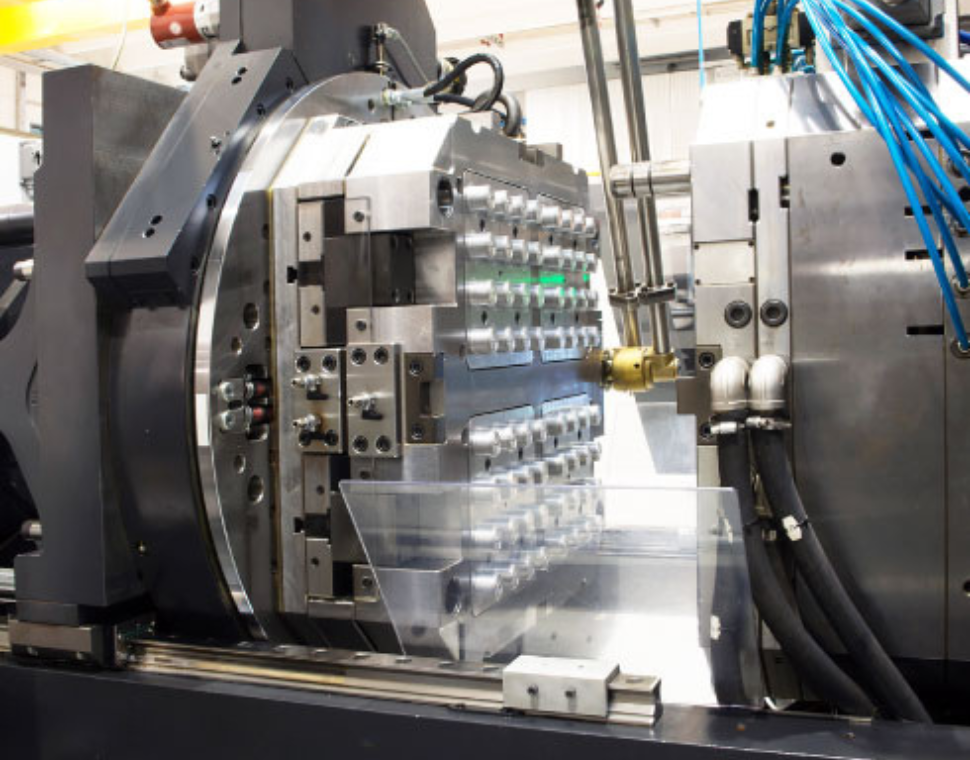
In plastic manufacturing, blow moulding is quite popular for producing hollow plastic items. All the consumer goods in plastic that we use daily are created with this specialized process where the extruded plastic is inflated and shaped in a pre-designed mould. Hence, the versatility of this technology allows easy production of everyday plastic products. From water bottles to jugs, to phone cases, and more, blow moulded plastics are always in high demand. In general, HDPE or high-density polyethylene is the preferred choice of plastic used for blow moulding.
The entire manufacturing scene is dominated by two primary types of blow moulding; Injection Blow Moulding and Extrusion Blow Moulding. However, both processes share the ability to shape intricate designs. Also, these processes are speedy and extremely economical in terms of tools and other expenses making it easier to produce on a large scale.
Due to the expansion in the packaging industry, ultimately the market of blow moulded plastic has boomed. As per a research report, the market size of blow moulded plastics was USD 90.69 billion while, by 2032, it will rise up to USD 141.89 billion. The largest market for blow moulded plastic is ofcourse, Asia Pacific. This clearly implies the future of blow moulding technology and the scope for India as a manufacturing market.
How Blow Moulding Works Exactly?
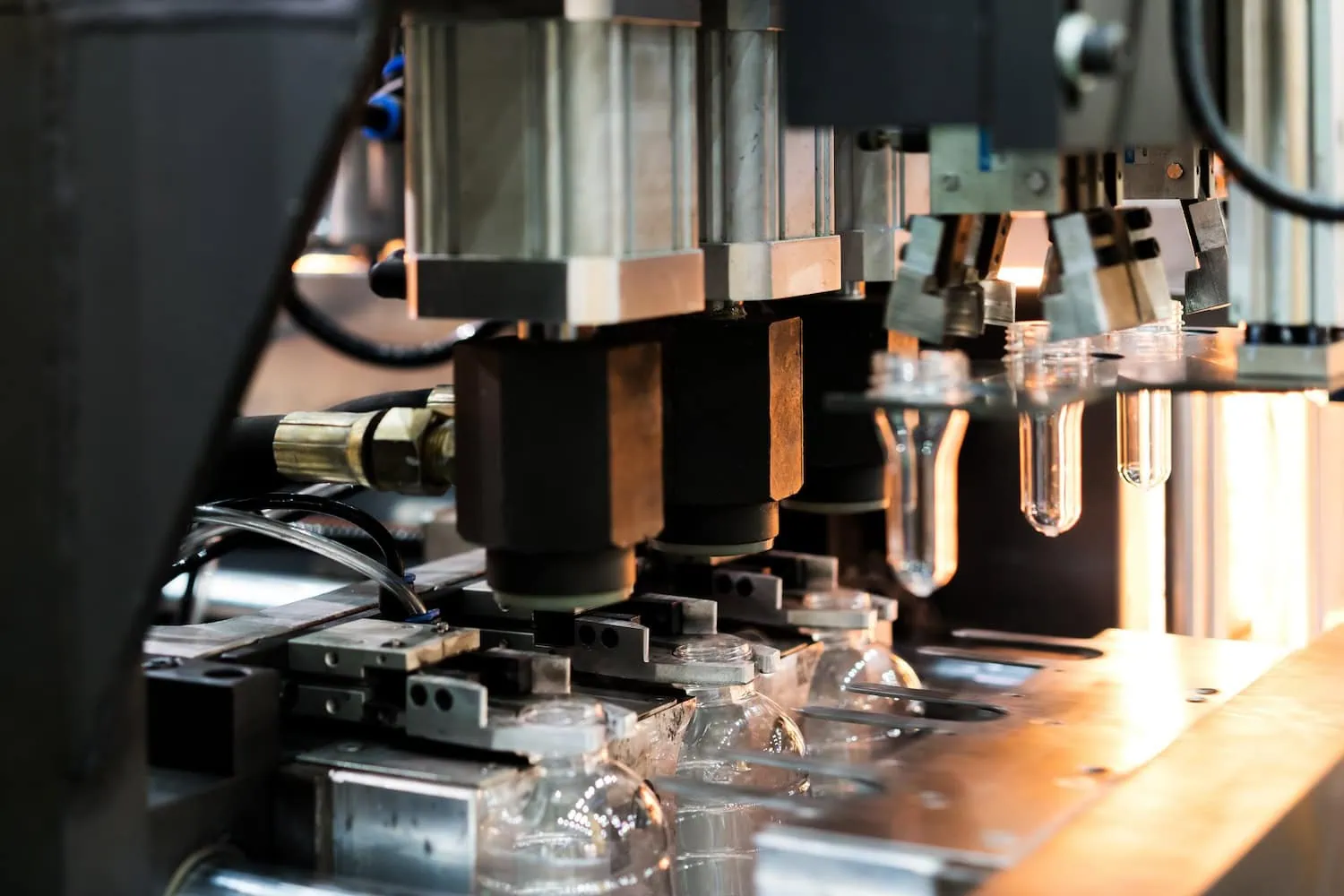
The blow moulding process has four distinct stages. Now let’s find out the process in depth.
- Material Selection and Compatibility Checks
In the beginning, a suitable polymer is selected as per the product demand. This material goes through stringent quality checks and is also checked for compatibility for subsequent stages.
- Preform or Parison Formation
In step 2, the polymer is heated until it reaches a malleable state. Then, it is moulded into a close-end tube, which is known as Parison or Preform. Here, the plastic takes its initial shape.
- Pressuring
Now the parison that is held in the mould halves is injected with pressurized air, therefore causing the tube to inflate and align with the mould’s contours, thereby crafting the desired shape.
- Cooling and Ejection
This is the last step in blow moulding. At this stage, the inflated polymer fits the mould and is set to cool down. Once cooled, the product is gently ejected from the machine and the excess plastic is trimmed, and thus we get the refined end product in plastic.
Now that you know the oddly satisfying blow moulding process, let’s find out its types and methods.
Types of Blow Moulding
Due to its versatile ability, blow moulding can be processed under various methods:
- Injection Blow Moulding
For items like beverage containers, storage tanks, and basically products that need higher precision, injection blow moulding is broadly used. Simply, traditional injection and blow moulding principles are merged to create the desired plastic shape.
- Extrusion Blow Moulding
This method involves extrusion of the hollow parison, that is, by forcibly pushing the material to give it a selected form. The extrusion technique is suitable for two-dimensional objects while the intrusion moulding can be used for three-dimensional product designs. This method is usually suitable for shampoo bottles, automotive air ducts, plastic drums, or containers for industrial purposes.
- Stretch Blow Moulding
As the name suggests, the preform or the parison is stretched before inflation, thereby enhancing the product’s mechanical robustness. Examples of stretch blow moulding can be liquid soaps, detergents, carbonated beverages, etc.
Limitations of Blow Moulding Technology
Everything has a drawback, and blow moulding is not an exception. Some challenges or limitations of blow moulding can be highlighted as follows:
- Excess material that is trimmed is either recycled or goes under material wastage if not repurposed
- Not all polymers are compatible with blow moulding, some polymers may not provide the desired finish, strength, and quality
- Blow moulding machinery may demand significant capital investment and regular maintenance
Despite these limitations, the blow moulding technique has widespread use in manufacturing due to three core benefits:
Benefits of Blow Moulding Manufacturing
- Production Efficiency
Blow moulding is popular for its speed and volume capacities. It needs minimum human intervention and importantly, it efficiently transforms raw plastic pellets into finished items.
- Adaptable Designing
Any intricate designs like geometric or abstract designs can be formed using the blow moulding technique due to its unparalleled flexibility.
- Cost-effective manufacturing
Specifically in the extrusion blow moulding method, the tooling expenses are reduced due to its low-pressure technique, therefore offering a cost-effective alternative for manufacturers.
For its prevalent use in on-demand manufacturing, blow moulding has multiple applications across industries.
- Food and Beverages
- Pharmaceuticals
- Automotive
- Cosmetic & Personal Care
- Waste Management and Storage
Partner with Mechkonnect for Blow Moulding Projects
Overall, blow moulding is a flexible and outstanding manufacturing method for small to medium-sized enterprises looking to scale up gradually, giving freedom to experiment as per the market demands. Mechkonnect offers an end-to-end solution to your mid and high-volume manufacturing needs with complete technicalities and state-of-the-art technology.