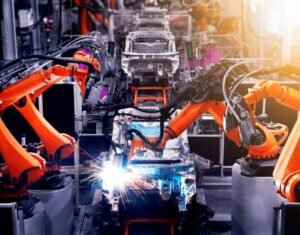
Efficiency, precision, and reliability are key in modern manufacturing. Among the various methods employed to achieve these goals, die casting stands out as a leading contender. This highly versatile process has revolutionized the production of complicated metal components across numerous industries. As an on-demand manufacturing company committed to excellence, Mechkonnect proudly offers one of the best die-casting services, harnessing this cutting-edge technology to meet the evolving needs of businesses worldwide.
As Meckonnect specializes in on-demand manufacturing, it offers one of the best die-cast services by using advanced technology
Concept of Die Casting
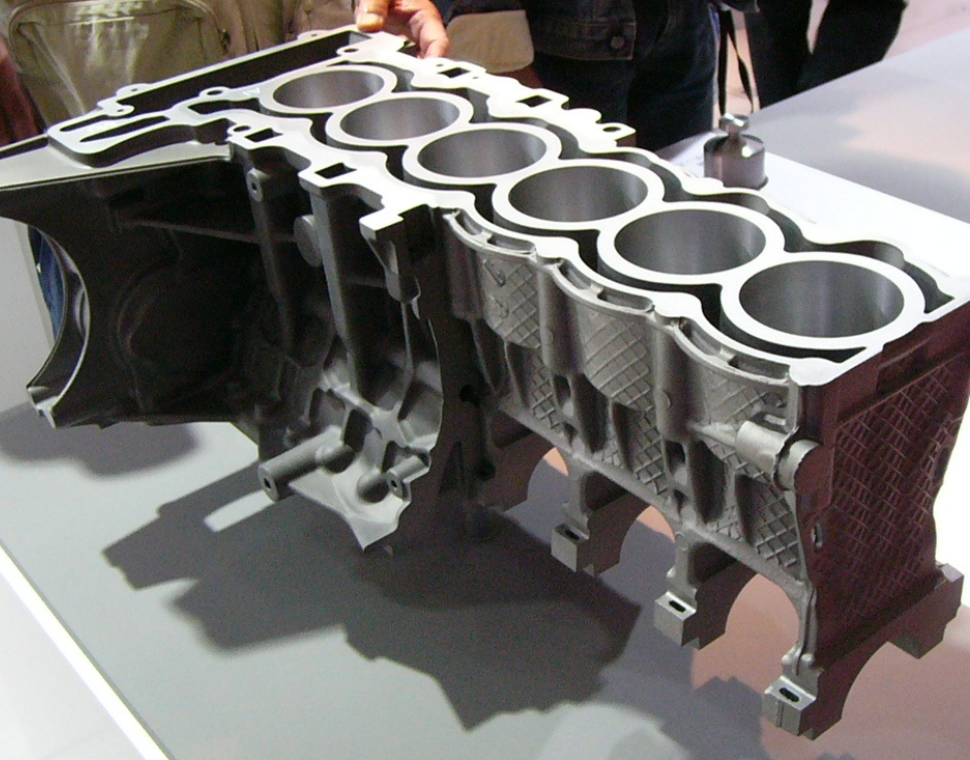
Die casting is a metal casting process that injects molten metal into a precisely designed mold at high pressure. The mold is made of hardened steel and produces accurate, complex shapes with excellent surface finish. Once the metal solidifies, the mold is opened to reveal the finished part. Die casting is a fast and efficient method for producing intricate parts with minimal post-processing requirements.
So now, what is the process of die-casting? Let’s learn more about it.
Process of Die Casting
The die-casting process comprises several key stages:
Tooling Design: A detailed mold, or die, is meticulously crafted to match the desired specifications of the final component.
Melting: The selected metal, often aluminum, zinc, or magnesium, is melted in a furnace to achieve the necessary viscosity for casting.
Injection: The molten metal is injected into the die cavity at high pressure, ensuring it fills all intricate features of the mold.
Cooling: Once filled, the metal solidifies rapidly within the die cavity.
Ejection: The mold opens, and the finished part is ejected, ready for further processing or assembly.
Now let us understand the types involved in die-casting.
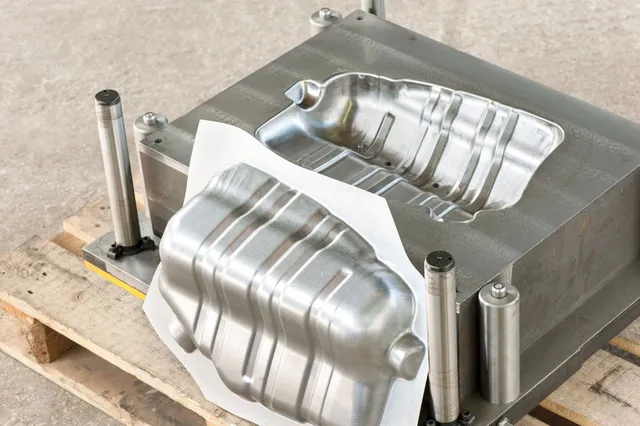
Types of Die Casting:
Primarily, die-casting is categorized into two types, as follows:
- Hot Chamber Die Casting
Ideal for metals with low melting points, such as zinc and magnesium, Hot Chamber Die-Casting involves injecting molten metal directly into the die cavity from a furnace.
- Cold Chamber Die Casting
Suited for metals with higher melting points, such as aluminum, Cold Chamber Die-Casting involves ladling molten metal into a separate chamber before injecting it into the die cavity.
Now that you know the concept, process, and types of die-casting, you might ask, what are the advantages of die-casting? Well, there are quite a few significant benefits of die-casting:
Significance of Die Casting:
Die casting offers numerous advantages over traditional manufacturing methods, including:
- Complex geometries and tight tolerances can be achieved with exceptional accuracy.
- The rapid production cycle and minimal material waste contribute to cost efficiency.
- Die casting accommodates a wide range of metals and alloys, enabling the production of diverse components.
- Die-cast parts exhibit superior mechanical properties, making them ideal for demanding applications.
- Components emerge from the die with a smooth surface finish, reducing the need for secondary machining operations.
However, die-casting may pose some problems in the metal manufacturing process. We will delve into each one of them to gain a better understanding.
Challenges in Die Casting:
While die-casting offers numerous benefits, it also presents some challenges, including:
- The initial investment in tooling can be substantial, particularly for intricate molds.
- Air entrapment during the casting process can lead to porosity in the final part, affecting its mechanical properties.
- Matching the right alloy to the application ensures optimal performance and longevity.
- Certain geometries may be challenging or impossible to achieve using die casting, necessitating alternative manufacturing methods.
Yet, die-casting is regarded as the most common casting process due to its high precision, strength, and durability. Talking about durability, below are the materials that can be used for die-casting.
Materials Suitable for Die-Casting
Die casting accommodates a wide range of materials, including:
Aluminum
Lightweight, corrosion-resistant, and highly recyclable, aluminum is a popular choice for numerous applications.
Zinc
Offering excellent dimensional stability and intricate detailing capabilities, zinc is commonly used for small, precision components.
Magnesium
Renowned for its exceptional strength-to-weight ratio, magnesium is ideal for applications requiring lightweight, high-performance parts.
These die-casted materials are then used in various technical and industrial applications.
Technical and Industrial Applications of Die Casting
Die casting finds extensive use across various industries, including:
Automotive: From engine components to structural parts, die-cast aluminum and magnesium are critical in modern vehicles, offering lightweight durability and precise tolerances.
Electronics: Die-cast housings and heat sinks provide robust protection and efficient thermal management for electronic devices.
Aerospace: The aerospace industry relies on die-cast components for their lightweight properties and stringent quality standards.
Consumer Goods: Everything from kitchen appliances to sporting goods benefits from the precision and durability of die-cast parts.
Everyday Applications of Die Casting Materials:
In addition to industrial sectors, die casting permeates everyday life through:
Household Appliances: Die-cast components ensure the reliability and longevity of household appliances such as refrigerators, washing machines, and vacuum cleaners.
Power Tools: The robust construction and precise tolerances of die-cast parts enhance the performance and durability of power tools.
Lighting Fixtures: Die-cast aluminum and zinc components provide aesthetic appeal and structural integrity to lighting fixtures in residential and commercial settings.
These everyday applications of die-casting let us understand more about the whole die-casting concept in depth.
Why Choose Mechkonnect for Die Casting Services?
At Mechkonnect, we pride ourselves on delivering unparalleled quality, precision, and efficiency in every aspect of our die-casting services. Here’s why businesses trust us:
We leverage the latest advancements in die-casting technology to ensure optimal results and superior performance. Our team of skilled engineers and technicians possess extensive experience in die casting, enabling us to tackle even the most complex projects with confidence. Our rigorous quality control processes guarantee precision and consistency in every component we produce. We understand the importance of deadlines, and our streamlined production processes ensure prompt delivery without compromising on quality.
Head on to learn more about die casting and get in touch with our experts for unmatched solutions.