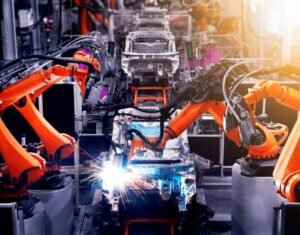
India’s manufacturing sector has become one of the central pillars of its economic growth strategy. Today, manufacturing contributes around 16–17 % of GDP and employs over 27 million workers, with ambitions to expand to a $1 trillion industry by 2025–26 and raise its share to 25 % of GDP in the near future.
Government programmes such as Make in India, PLI schemes, and large-scale infrastructure investment have catalysed production capacity across key sectors like electronics, semiconductors, pharmaceuticals, capital goods, and textiles. However, as capacity expands, a quieter but deeper challenge is emerging: the precision talent gap that threatens to slow, rather than accelerate, India’s manufacturing ambitions.
The Precision Workforce Challenge
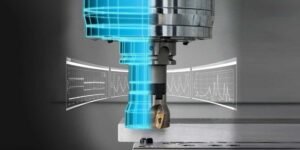
Modern manufacturing is no longer about scale alone. It is defined by efficiency, repeatability, and technical accuracy. Critical capabilities such as CNC programming, metrology, tooling design, and precision machining are not merely operational skills; they are the backbone of quality-driven production.
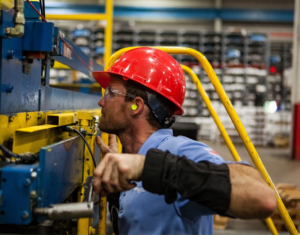
Yet structural skill gaps persist across the Indian industry. Studies highlight that India faces a shortfall of tens of millions of skilled workers, with demand for skilled labour outstripping supply by a large margin. One industry estimate suggests that demand for skilled labour stands at 103 million, while supply is around 74 million, leaving a substantial deficit.
At the same time, broader employability statistics reflect a persistent challenge: only about 56 % of Indian graduates are considered employable in job-ready terms, even as demand rises across sectors requiring specialised technical skills.
For manufacturing segments that lean heavily on precision and domain expertise, these gaps translate directly into productivity constraints. Reports indicate that 71 % of manufacturers feel that existing government training programmes do not adequately equip workers with relevant capabilities, especially in smaller enterprises and MSMEs, where structured upskilling is often missing.
Why Precision Skills Matter Now
Precision engineering and advanced manufacturing are central to India’s strategic vision in multiple sectors:
- Semiconductors and electronics require micro-level tolerance control, advanced fixtures, and process discipline.
- Capital goods and tools demand exact machining, predictive tooling life assessments, and reproducible quality.
- Defence and aerospace applications depend on rigorous metrology, high-precision machining, and integrated design-to-manufacture workflows.
These are not broad factory skills; they are synthesis skills that combine engineering understanding, tooling logic, software fluency, and manufacturing experience.
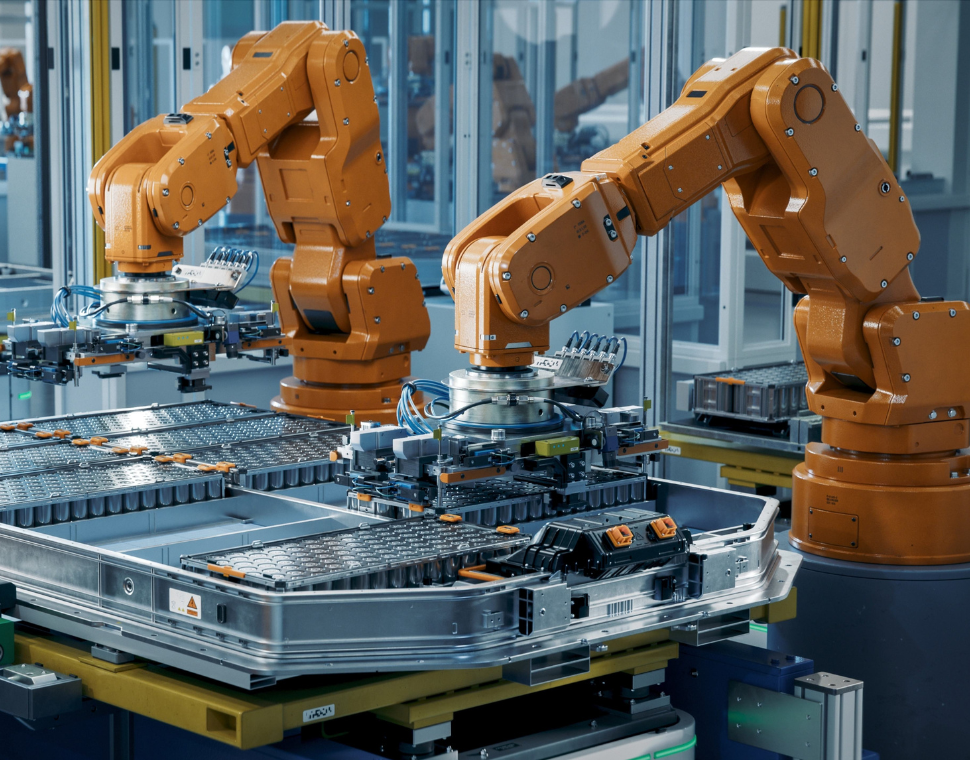
Moreover, the rise of digital technologies such as CNC automation, additive manufacturing, industrial robotics, and data analytics is reshaping job requirements. Nearly 40 % of skills required across industries are expected to change by 2026, and more than 60 % of employers already cite the skills gap as a key hiring barrier.
In this environment, the difference between a machine performing a task and a machine generating reliable, repeatable precision outputs hinges on the skills of those who program, monitor, calibrate, and adapt it.
The Real Cost of the Gap
A skills mismatch doesn’t just slow growth; it affects competitiveness:
- Underutilised production capacity: Insufficiently skilled workers contribute to lower throughput and higher defect rates, eroding margins and order fulfilment reliability.
- Higher dependency on imports: When core capabilities are absent domestically, manufacturers rely on imported components, tooling, or expertise, reducing the impact of “Make in India” initiatives.
- Slow adoption of new tech: Firms may hesitate to adopt advanced automation or manufacturing technology if the workforce lacks corresponding skills.
Bridging the Gap: A Systemic Need
Addressing this precision talent gap is not a short-term HR issue; it is a strategic industrial imperative. Some key elements of a sustainable solution include:
- Alignment between industry and skilling institutions: Co-developed curricula with polytechnics, ITIs, and engineering programmes to prepare students for real-world precision manufacturing requirements.
- Structured apprenticeships: Long-form, on-the-job training that blends theory with shop-floor practicum focused on CNC, metrology, CAD/CAM, and process engineering.
- Continuous upskilling frameworks: In-company programmes that keep existing workers abreast of automation, data tools, and advanced manufacturing workflows.
- MSME participation: Government and industry partnerships that enable smaller manufacturers to access training hubs and shared upskilling resources.
Conclusion
India’s manufacturing momentum is unmistakable; policy support, infrastructure, and global investment flows are strong. But physical assets and production lines are only as effective as the minds and hands that drive them.
Precision talent is not an accessory to manufacturing growth; it is its core enabler. Without a focused, coordinated effort to build deep, specialised capability in CNC machining, metrology, tooling, process optimisation, and advanced manufacturing techniques, India risks under-leveraging its investments and slowing its industrial trajectory.
If manufacturing is to be the engine of India’s next phase of economic growth, it must not only scale production, it must scale the capability to make things well, accurately, and reliably.