In the diverse landscape of manufacturing, the choice of cutting processes can be the linchpin to precision, efficiency, and cost-effectiveness.
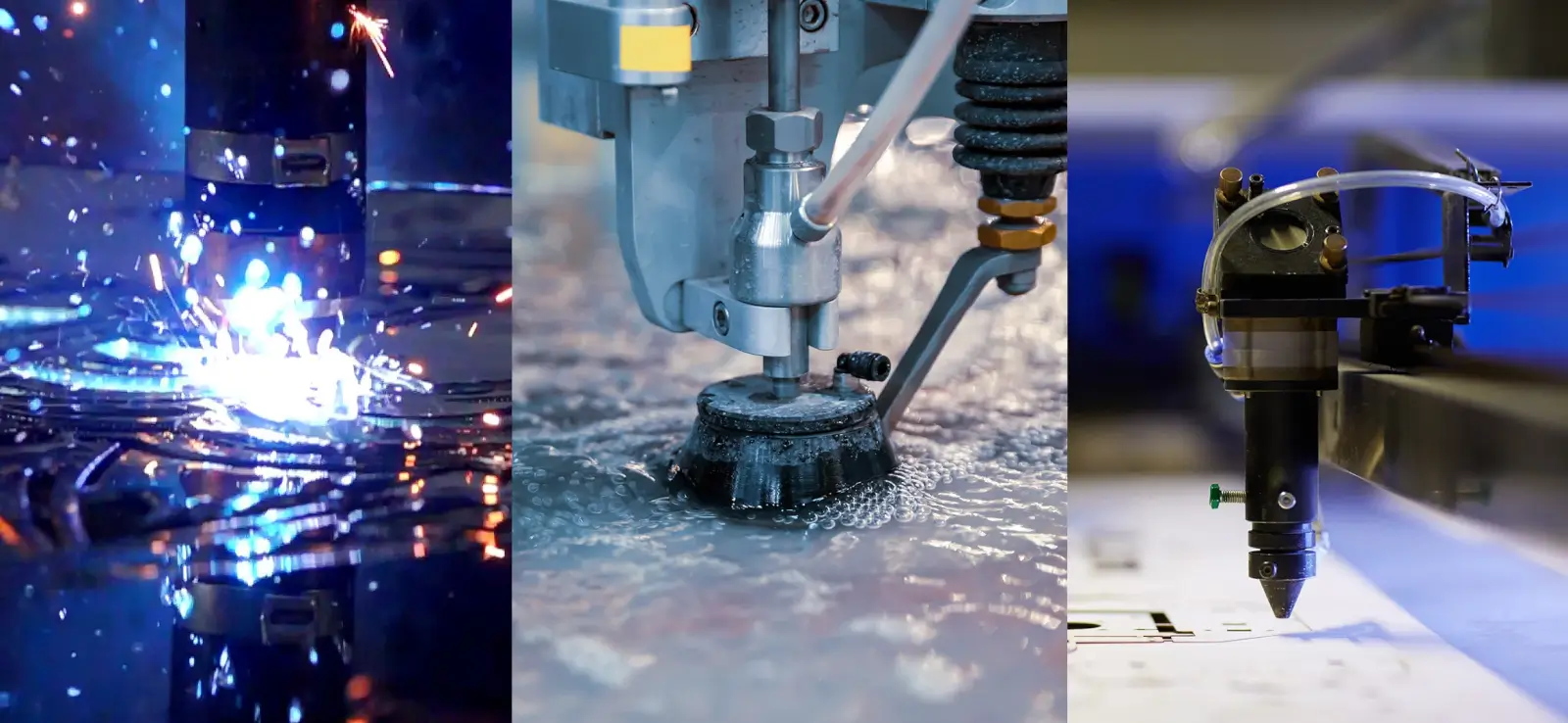
Laser cutting, plasma cutting, and water jet cutting stand as stalwarts, each wielding its unique strengths and applications. We will break it down in simple terms for you.
Let’s explore these methods further, unraveling their processes, advantages, comparisons, and applications to empower your decision-making.
Laser Cutting: Precision in Every Beam
Laser cutting is a highly precise and efficient method that utilizes a focused beam to cut through materials. It is widely used for intricate designs and high-precision cutting in various industries. Laser cutting involves the use of a laser, typically a CO2 or fiber laser, to melt, burn, or vaporize the materials. The process is highly precise with the ability to create elaborate shapes and minute details. Laser cutting is suitable for a wide range of materials, including metals, plastics, wood, and more. Generally, the laser cutting process is applicable in industries such as aerospace, automotive, electronics, and signage.
Now let’s understand the advantages in detail.
Advantages of Laser Cutting:
- High precision and accuracy
- Minimal material waste
- Versatility across various materials
- Minimal heat-affected zone
1. Plasma Cutting
Plasma cutting is a thermal cutting process that uses ionized gas to melt and expel material. This method is commonly employed for cutting thick metal sheets and is favored for its speed and cost-effectiveness. A plasma cutter generates an electrically conductive plasma arc that cuts through electrically conductive materials. Plasma cutting is suitable for cutting metals, especially thick materials. As compared to other cutting processes, plasma cutting has a faster cutting speed. Plasma cutting is used in industries like metal fabrication, construction, and automotive.
Now let’s know the advantages in detail.
Advantages of Plasma Cutting:
- High cutting speed
- Ability to cut thick materials
- Cost-effective for large-scale production
- Versatility with different metals
2. Water Jet Cutting
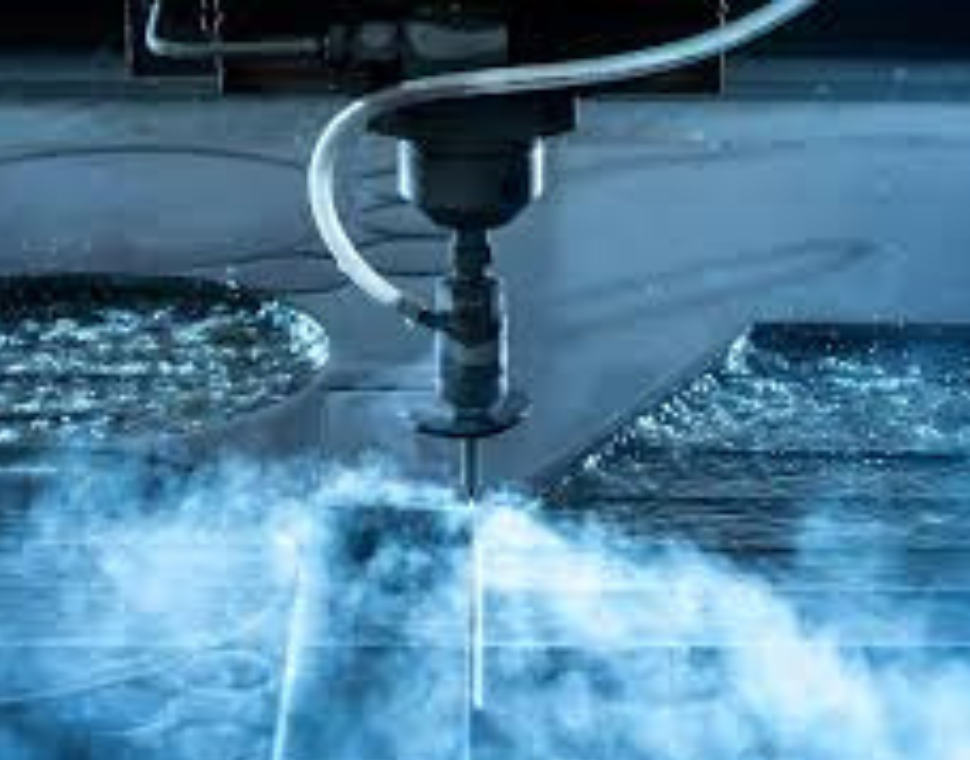
Water jet cutting employs a high-pressure stream of water or a mixture of water and abrasive material to cut through various materials. This non-thermal process is valued for its versatility and environmental friendliness. Water jet cutting can be pure (water only) or abrasive (water and abrasive particles). Water jet cutting is suitable for a wide range of materials, including metals, glass, stone, and composites. This is a cold-cutting process, which means that there is no heat-affected zone. Water jet cutting is generally used in industries such as aerospace, architecture, and manufacturing.
Now let’s identify the advantages in detail.
Advantages of Water Jet Cutting:
- Versatility across materials
- Environmentally friendly (no hazardous fumes or by-products)
- Cold cutting process, preserving material properties
- Minimal need for secondary finishing
Now that you know the overview of all three cutting processes, let us check out the differences between each other as per various attributes.
Comparison Table of Cutting Processes:
Criteria | Laser Cutting | Plasma Cutting | Water Jet Cutting |
Cutting Method | Laser beam focused on material | Electrically conductive plasma arc | High-pressure water or water/abrasive mixture |
Precision | High | Moderate | High |
Material Versatility | Broad Range (metals, plastics, wood) | Mainly metals (especially thick) | Wide range (metals, glass, stone, composites) |
Thickness Capability | Thin to medium | Thick | Wide range, including thick |
Cutting Speed | Moderate to high | High | Moderate (varies with material) |
Heat-Affected Zone | Minimal | Present | None (cold cutting) |
Environmental Impact | Minimal | Moderate | Low (minimal waste) |
Applications | Electronics, Aerospace, Automotive | Metal Fabrication, Construction, Automotive | Aerospace, Architecture, Manufacturing |
Get started with cutting processes in on-demand manufacturing
Whether you’re creating prototypes, personalized products, or catering to unique demands, these cutting methods offer the precision and adaptability demanded by on-demand manufacturing. On-demand manufacturing revolves around producing items as and when they are needed, minimizing waste, and optimizing resources. The flexibility of laser cutting, the efficiency of plasma cutting, and the versatility of water jet cutting align seamlessly with the on-demand philosophy.
Overall, understanding the distinctions between laser cutting, plasma cutting, and water jet cutting is essential for making informed decisions in manufacturing processes. Each technique has its strengths, and the choice depends on factors such as material type, thickness, precision requirements, and budget considerations. By leveraging the advantages of these cutting processes, manufacturers can optimize their operations and achieve superior results in their respective industries.
Mechkonnect’s seamless material-cutting solution
The precision of metal or material cutting holds paramount importance, dictating the quality and efficiency of the end product. MechKonnect stands as a reliable solution provider, seamlessly integrating cutting-edge technologies to deliver precision in the fabrication process. With a keen understanding of the diverse needs in on-demand manufacturing, MechKonnect’s cutting solutions, whether through laser, plasma, or water jet cutting, cater to a spectrum of materials with unmatched accuracy. This precision not only ensures minimal waste but also facilitates rapid prototyping and customization, aligning perfectly with the dynamic requirements of on-demand production. MechKonnect’s commitment to excellence in material cutting contributes significantly to the success of on-demand manufacturing, assuring clients of quality and efficiency in every project.
Simply fill out this form and let us know about your material cutting requirement and receive a quote for the complete process.